Bar vs Daytime Approaches Frame: Calibrate Right
Bar vs daytime approaches frame demands distinct posture, openers, and signal reads. Apply these observable steps for noise, context, and composure in each en
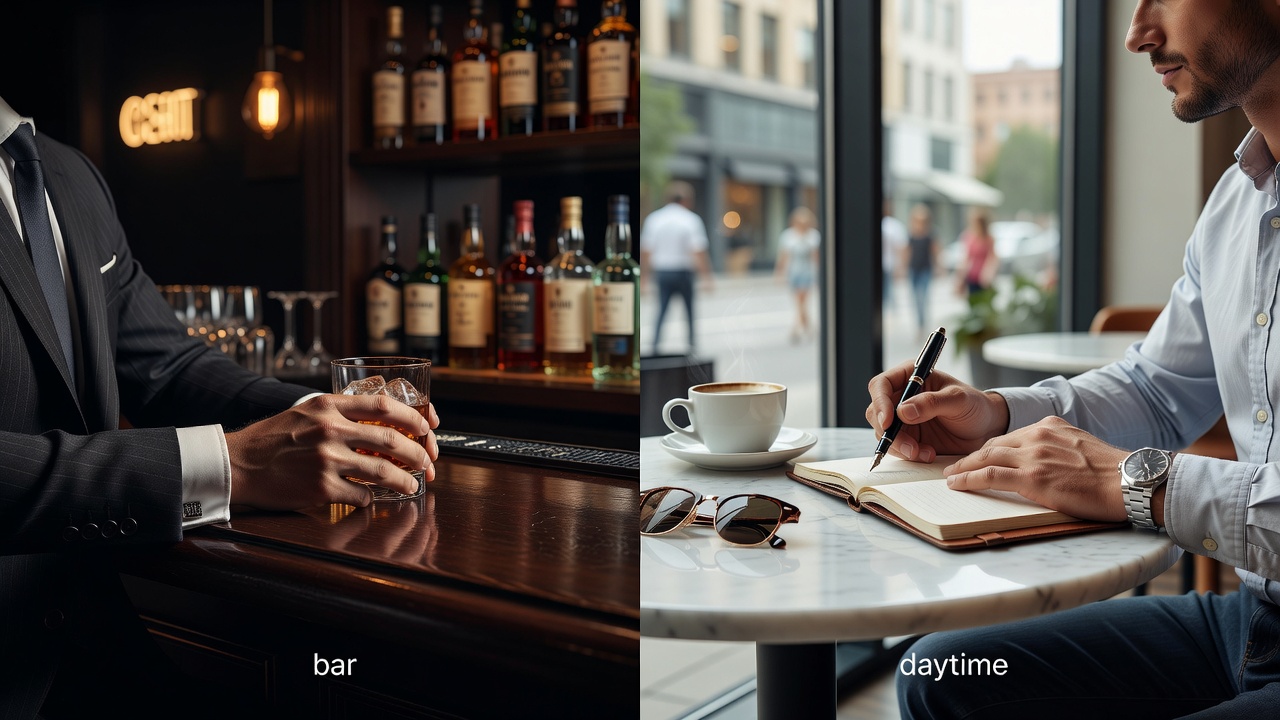
Bar vs Daytime Approaches Frame: Calibrate Right
Most men open the same way in both settings and lose frame fast. Bar vs daytime approaches frame starts with environment checks: volume, time pressure, and social expectations change what lands.
Adjust three elements first—posture entry, opener length, and eye contact duration—before any words. These shifts keep you readable and steady.
Key takeaways
- Bar settings reward louder warmth and quick pivots.
- Daytime settings reward low-pressure context and steady pacing.
- Frame holds when you match visible signals, not scripts.
- Test one change per approach and note results.
Opening Line Length by Setting
Bar openers run 8-12 words max before a pause. Daytime openers run 5-7 words and wait for her first reply. The length difference comes from noise levels and her available attention. In bars, people expect quick hooks because conversations compete with music and movement. Daytime allows shorter statements because she processes context like location or time without distraction.
- Scan her current action before speaking.
- Match volume to the room's background noise.
- Deliver, then drop shoulders and hold still.
- Count three seconds of silence before adding anything.
Trade-off example: A 10-word bar opener like "This playlist keeps switching genres" invites immediate reply. Shorten it to four words daytime to avoid seeming abrupt during her commute.
Posture Entry Rules
Walk in with shoulders back and chin level in both places. The difference appears in hand position and speed. Nonverbal communication research from the American Psychological Association shows posture signals intent within the first two seconds of entry. Bars allow slight forward lean because the crowd absorbs it. Daytime requires neutral stance to avoid looking rushed.
- Bar: hands visible at sides, stride matches music tempo.
- Day: hands relaxed, stride slower than ambient foot traffic.
- Reset by rolling shoulders once if you feel forward lean.
- Check reflection in windows or mirrors before the first sentence.
Add a fifth check: note her initial foot angle before you close distance. This observable prevents mismatched energy.
Eye Contact Patterns Interest
Eye contact patterns interest shift by distance and lighting. Bars allow 2-3 second holds. Daytime caps at 1-2 seconds before a soft break. University studies on social gaze confirm shorter holds reduce perceived threat in open daylight settings. Run this sequence each time:
- Initial glance at her eyes or mouth.
- Break to her shoulder or drink.
- Return for confirmation glance.
- Hold only while she speaks.
Eye contact patterns interest gives exact micro-adjustments. Track her blink rate as a secondary signal—if it slows, extend the second glance by half a second.
Voice Tone Calibration Attraction
Voice tone calibration attraction uses pitch drops at the end of statements in bars. Daytime keeps even pace with slight upward lifts on questions. Background noise forces volume changes that can erode frame if unchecked. Apply these steps:
- Lower volume 10 percent below room level in bars.
- Raise pace slightly when she smiles.
- Pause 0.8 seconds after her name.
- Reset by clearing throat once if pitch rises.
Voice tone calibration attraction details the resets. In bars, test dropping pitch on the last word of your opener and note whether she mirrors it.
Compliance Tests Dating Frame
Compliance tests dating frame appear faster in bars due to alcohol and crowds. Daytime tests show up as logistics questions. The table below compares timing and responses so you can prepare exact counters.
| Aspect | Bar Approach | Daytime Approach |
|---|---|---|
| First test timing | Within 90 seconds | After 3-4 minutes |
| Common test | "Buy me a drink?" | "Are you always this direct?" |
| Pass move | Neutral pivot to shared observation | Answer then ask about her schedule |
| Frame reset | Shoulder roll and step back | Slow nod and re-anchor feet |
Respond with one observable action, never explanation. Compliance tests dating frame lists additional edge cases like repeated tests within five minutes.
Conversational Misstep Recovery
Conversational misstep recovery follows the same posture reset in both settings. The difference is topic pivot speed. Bars give you four seconds before group energy pulls attention away. Daytime gives six seconds because she stays in place longer.
- Bar: pivot to nearby group energy or music within 4 seconds.
- Daytime: pivot to location detail within 6 seconds.
- Count steps backward mentally to regain calm.
- Resume with a statement, not a question.
Conversational misstep recovery supplies the exact pivot phrases. Practice the count in real time so the reset becomes automatic.
Maintain Frame on Bad Day
Maintain frame on bad day uses the same two resets everywhere: chin lift and breath hold for one count. Bars add a drink-sip delay. Daytime adds a 10-second phone check pause. Bad days amplify small posture leaks, so run the sequence twice before the second approach.
Apply these steps in order:
- Stand taller for three full breaths.
- Speak your next line at half normal speed.
- Track her feet—if they turn away, end cleanly.
- Log the approach in notes within 30 minutes.
Maintain frame on bad day shows how to repeat the sequence without visible hesitation.
Environment Specific Openers
Environment specific openers tie directly to visible context. Bars reference shared noise or drinks. Daytime references time of day or location task. Test each opener in its native setting three times before editing wording.
- Bar example: "This playlist keeps switching genres."
- Day example: "The line here moves faster after noon."
- Test one opener three times before changing wording.
- Track reply rate by hour of day.
Add context layers: mention a specific drink or nearby landmark to increase reply specificity.
Handling Interruptions in Crowded vs Open Spaces
Interruptions test frame differently by density. Bars produce frequent shoulder bumps or friend arrivals every two to three minutes. Daytime interruptions arrive as phone checks or passing strangers every five minutes. Use posture resets immediately in both cases.
- Pause mid-sentence when the interruption lands.
- Re-anchor feet shoulder-width before resuming.
- Acknowledge the break with a neutral statement like "Back to what you said."
- Shorten your next line by two words to regain momentum.
- Log interruption frequency after the set ends.
Frame recovery after group date interruptions details the pivot sequence for larger groups. Apply the same reset speed whether the interruption is loud music or a delivery truck.
Next Steps
Run five bar approaches this week using only the bar column from the table above. Then run five daytime approaches using the daytime column. Compare your own notes on frame retention.
- Review logged reply lengths after each session.
- Adjust one variable, such as eye-contact duration, for the next round.
- Download the frame PDF guides at The Playbook for the full checklists and audio drills.
- Schedule a weekly comparison of bar versus daytime results.
FAQ
How long should I stay in a bar set before moving on?
Exit after her second short reply if feet stay pointed away. Count 90 seconds total.
Do daytime approaches need different clothing?
Wear what fits the location task—work attire or casual daytime layers. Avoid bar-night shirts.
What if she tests compliance immediately?
Answer once, then shift topic to an external observation. Never negotiate.
Can the same opener work in both settings?
Only if shortened for daytime. Bars tolerate longer hooks; daytime does not.
How do I track which frame works better?
Note reply length and body angle after each approach. Review weekly for patterns.